How to Build an AI-Ready Technology Infrastructure
How to Build an AI-Ready Technology Infrastructure
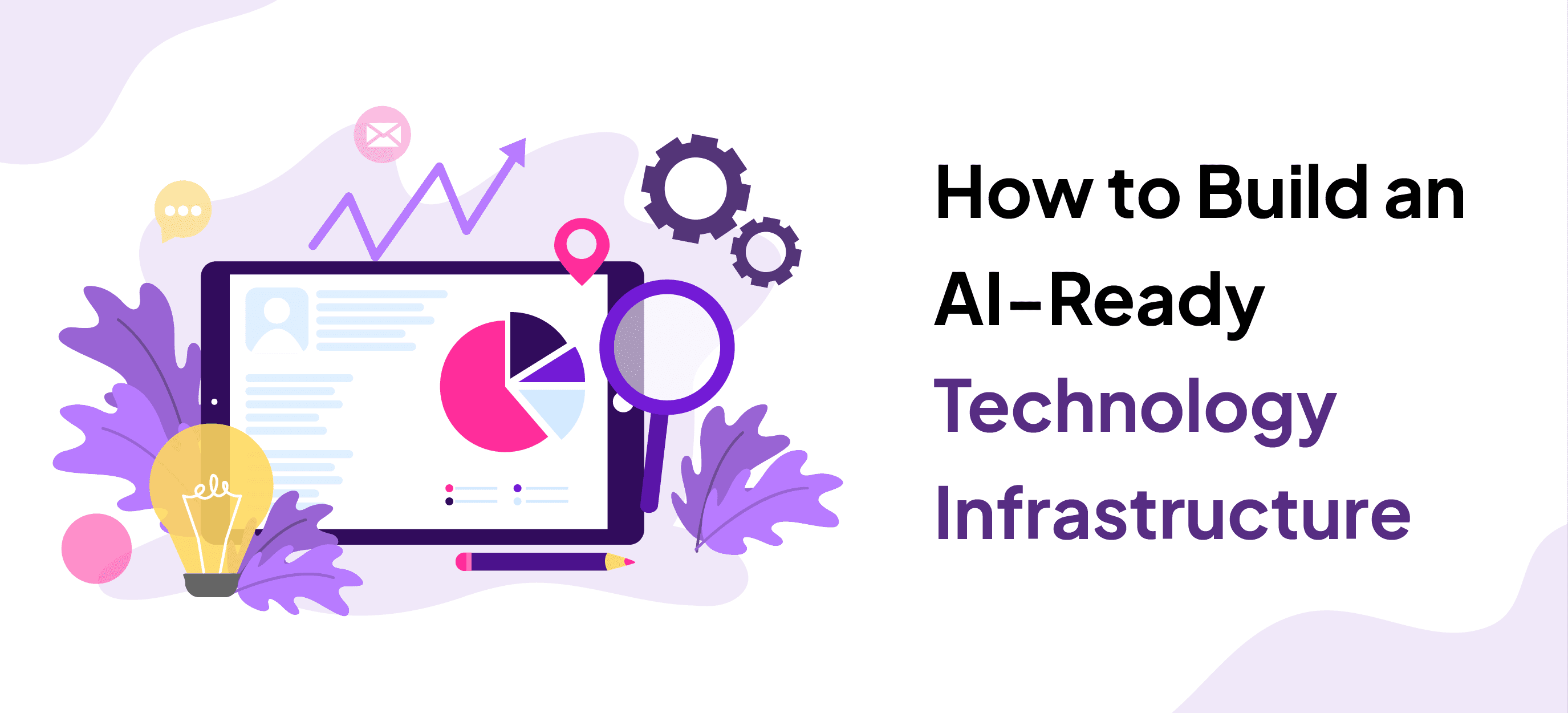
AI adoption doesn't begin when you launch an AI application. It begins with the infrastructure underneath it.
Many businesses are eager to introduce AI into their operations, but the technology environment supporting the business may not be ready for it.
AI systems depend on data, computing resources, integrations, security controls, and reliable applications. If these foundations are fragmented, implementing AI can become significantly more complicated.
An AI-ready business environment starts with accessible and reliable data.
Information may currently be distributed across ERP systems, CRM platforms, databases, spreadsheets, websites, and internal applications. Connecting these sources allows AI systems to work with more relevant information.
Cloud Infrastructure
AI workloads can require significant computing resources.
Cloud infrastructure can provide businesses with the scalability needed to increase or decrease computing resources according to demand.
This can be particularly useful when experimenting with AI applications before committing to large-scale infrastructure investments.
Integration Matters
AI becomes more useful when it can interact with business systems.
For example, an AI solution might need information from a CRM, ERP, HR platform, or customer support system.
APIs and integration layers can allow AI applications to communicate with these systems.
Security Cannot Be an Afterthought
AI may process sensitive business and customer information.
Organizations therefore need appropriate identity management, access controls, data protection, monitoring, and governance.
The objective isn't simply to make AI available.
It's to make AI usable, scalable, secure, and aligned with business requirements.
See Other Related Blogs
AI for Business in Saudi Arabia: How No-Code Platforms Are Revolutionizing Enterprises
Read More
Congnix AI: The Future of No-Code Artificial Intelligence for Saudi Businesses
Read More
IoT in Saudi Arabia: How to Power Smart Cities and Factories with OSIT Solutions
Read More
Artificial Intelligence in Saudi Arabia | The Future of Business with OSIT
Read More
Digital Transformation in Saudi Arabia | Start Your Roadmap with OSIT
Read More
AI Applications in Customer Service in Saudi Arabia | OSIT AI Solutions
Read More
HUMAIN & Groq Launch OpenAI Models Locally in Saudi Arabia
Read More
Saudi Investment in AI Infrastructure Boosted with 18,000 Nvidia AI Chips
Read More
Saudi Arabia Integrates Artificial Intelligence into Educational Curricula for 2025 (FiFreedomToday)
Read MoreAI for Business in Saudi Arabia: How No-Code Platforms Are Revolutionizing Enterprises
Read MoreCongnix AI: The Future of No-Code Artificial Intelligence for Saudi Businesses
Read MoreIoT in Saudi Arabia: How to Power Smart Cities and Factories with OSIT Solutions
Read MoreArtificial Intelligence in Saudi Arabia | The Future of Business with OSIT
Read MoreDigital Transformation in Saudi Arabia | Start Your Roadmap with OSIT
Read MoreAI Applications in Customer Service in Saudi Arabia | OSIT AI Solutions
Read MoreHUMAIN & Groq Launch OpenAI Models Locally in Saudi Arabia
Read MoreSaudi Investment in AI Infrastructure Boosted with 18,000 Nvidia AI Chips
Read More