How Odoo Connects Business Operations in One Platform
How Odoo Connects Business Operations in One Platform
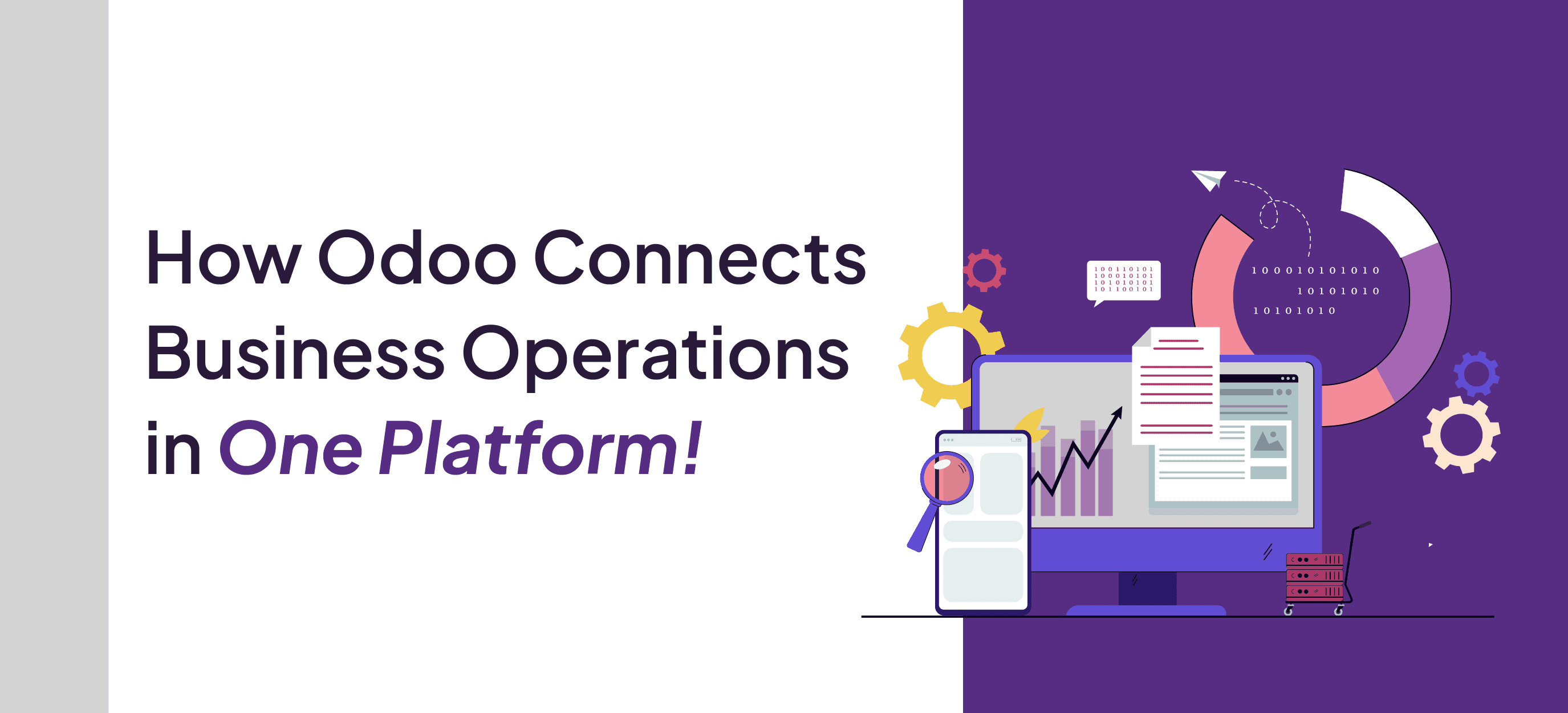
Running a growing business often means managing too many systems at the same time.
Sales operates in one application. Inventory is managed somewhere else. Accounting maintains separate records, while employees may use another platform for daily operations.
The result can be duplicated information, manual data entry, delayed reporting, and difficulty getting a complete view of the business.
This is where Odoo can make a significant difference.
Odoo is an integrated business management platform that brings multiple business functions together within one ecosystem. Depending on the organization's requirements, businesses can use Odoo for CRM, sales, accounting, inventory, purchasing, website management, e-commerce, HR, project management, marketing, and other operational processes.
For example, when a customer places an order, information doesn't necessarily need to remain isolated within the sales process. It can connect with inventory, invoicing, accounting, delivery, and customer records.
This creates a more connected workflow.
From Sales to Payment
A typical business transaction can involve several stages:
Lead → Quotation → Sales Order → Inventory → Delivery → Invoice → Payment
When these processes are connected, employees spend less time moving information manually between systems.
Better Inventory Visibility
Inventory management becomes particularly important as businesses grow.
Odoo can help organizations monitor stock levels, manage warehouses, track products, and connect inventory activities with sales and purchasing processes.
Instead of asking multiple departments for information, decision-makers can work from a more centralized operational environment.
More Than ERP
One of the strengths of an integrated platform is that businesses don't have to think about every function as a separate software project.
A company may begin with CRM and sales, then expand into inventory, accounting, e-commerce, HR, or other modules as requirements evolve.
This allows technology to grow alongside the business.
The real value of Odoo isn't simply having many applications under one name.
It's the ability to create connected business processes.
See Other Related Blogs
Unlocking Digital Success: Why Saudi Businesses Must Embrace Custom Software Development?
Read More
Custom Software Development in Saudi Arabia | Smart Solutions with OSIT
Read More
Best Practices for Software Development in the Saudi Market | OSIT
Read More
“Humain” Empowers Saudi Developers with Groq’s High-Speed Technology
Read More
Saudi Arabia Launches "Barmaj" Platform to Support Local Software Developers
Read More
Common ERP Implementation Mistakes and How to Avoid Them
Read More
How System Integration Enables Business Growth
Read More
How ERP Systems Enable Sustainable Business Growth
Read More
Why Lack of System Integration Slows Business Growth
Read MoreUnlocking Digital Success: Why Saudi Businesses Must Embrace Custom Software Development?
Read MoreCustom Software Development in Saudi Arabia | Smart Solutions with OSIT
Read MoreBest Practices for Software Development in the Saudi Market | OSIT
Read More“Humain” Empowers Saudi Developers with Groq’s High-Speed Technology
Read MoreSaudi Arabia Launches "Barmaj" Platform to Support Local Software Developers
Read MoreCommon ERP Implementation Mistakes and How to Avoid Them
Read MoreHow System Integration Enables Business Growth
Read MoreHow ERP Systems Enable Sustainable Business Growth
Read More