Why Unified Digital Ecosystems Are the Future of Business Operations?
Why Unified Digital Ecosystems Are the Future of Business Operations?
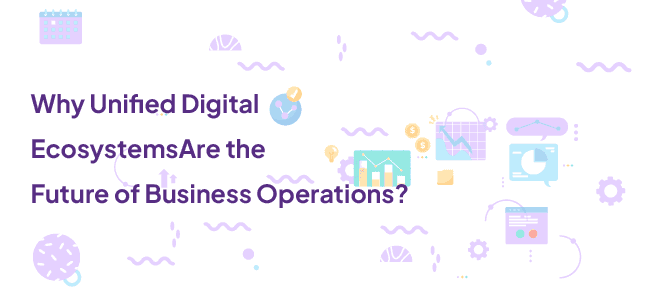
Modern businesses no longer operate using a single platform.
Organizations now depend on ERP systems, CRM platforms, HR software, cloud infrastructure, mobile applications, analytics tools, and communication platforms simultaneously. While these technologies improve capabilities, many businesses still operate them separately.
This creates disconnected workflows, duplicate data entry, operational delays, and reporting inconsistencies.
A unified digital ecosystem connects all business systems into one synchronized operational environment where data flows automatically between platforms in real time.
For example:
• Sales data updates inventory automatically
• HR systems sync employee information with payroll
• CRM activities update operational dashboards
• Financial systems receive real-time transaction data
This level of integration improves operational visibility, reduces manual processes, and enables faster decision-making.
Businesses with connected ecosystems become more agile, scalable, and efficient because departments no longer operate in isolation.
The future of enterprise operations is not simply about using more software.
It is about building connected digital infrastructure that allows businesses to operate intelligently at scale.
See Other Related Blogs
Custom Software Development in Saudi Arabia | Smart Solutions with OSIT
Read More
Challenges of Digital Transformation in Saudi Arabia | And How to Overcome Them
Read More
Saudi Arabia Leads the World in Open Data and Drives Digital Transformation
Read More
Saudi Arabia Advances in Digital Government Services Ranking for the Third Time
Read More
Open Data Platform Supports Planning and Analytics for Vision 2030
Read More
Saudi Arabia Makes Significant Progress in Digital Transformation Index 2025
Read More
Saudi PIF Acquires Stake in EA to Expand Global Gaming Influence
Read More
Saudi Lahint Platform Joins Google’s Smart Government Program
Read More
Why Digital Transformation Fails Without Process Alignment
Read MoreCustom Software Development in Saudi Arabia | Smart Solutions with OSIT
Read MoreChallenges of Digital Transformation in Saudi Arabia | And How to Overcome Them
Read MoreSaudi Arabia Leads the World in Open Data and Drives Digital Transformation
Read MoreSaudi Arabia Advances in Digital Government Services Ranking for the Third Time
Read MoreOpen Data Platform Supports Planning and Analytics for Vision 2030
Read MoreSaudi Arabia Makes Significant Progress in Digital Transformation Index 2025
Read MoreSaudi PIF Acquires Stake in EA to Expand Global Gaming Influence
Read MoreSaudi Lahint Platform Joins Google’s Smart Government Program
Read More